Noise-cancelling earbuds for flights
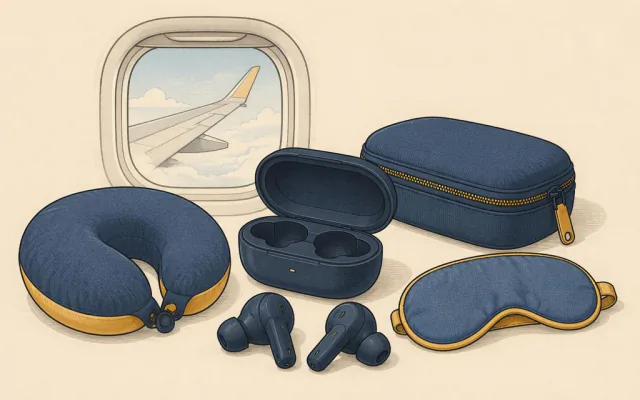
Aircraft cabins are loud. On a long-haul flight the steady roar from engines and airflow often sits around 80 decibels, comparable to a busy street, for hours on end. Noise-cancelling earbuds can take much of the edge off that, making it easier to sleep, listen at lower volume and arrive less tired. Here is what to look for.
How active noise cancelling works
Active noise cancelling (ANC) uses tiny microphones on each earbud to pick up outside sound. A chip creates an opposite sound wave and plays it through the speaker, so the two cancel each other out. It works best on steady, low-frequency noise, which is exactly what engine drone is.
ANC is less effective against sudden or high-pitched sounds: voices, crying babies, trolley rattles and announcements. Those are reduced mainly by passive isolation, the physical seal the ear tip makes in your ear canal.
Fit matters as much as electronics
A poor seal undoes most of the benefit. Try every ear tip size in the box; many people need a different size in each ear. Some earbud apps include a fit test that plays a tone and checks the seal. Foam tips seal better than silicone for many people and are sold separately in standard sizes.
If earbuds hurt after an hour, they will not survive a ten-hour flight. Comfort is personal; smaller earbuds with a short stem tend to suit people who sleep on their side.
Battery life
Check the battery figure with ANC turned on, which is usually lower than the headline number. Six to eight hours per charge is typical for current models, with the case holding two or three more charges. On a very long flight, put one earbud in the case while you use the other, or recharge both during a meal.
In-flight entertainment
Earbuds connect by Bluetooth, but most seat-back screens still have only a wired headphone socket. Options:
- A small Bluetooth transmitter that plugs into the seat socket and connects to your earbuds. Some recent aircraft support Bluetooth directly from the seat screen.
- Download films and series to your phone or tablet before the trip and watch with your earbuds as normal.
- Pack a cheap pair of wired earphones as a backup.
Useful features for travel
- Transparency or ambient mode lets you hear announcements and talk to cabin crew without removing the earbuds.
- Multipoint connection switches between phone and laptop automatically.
- Wireless charging case reduces cables in your kit.
- Water resistance (IPX4 or better) helps if you also use them for exercise.
Earbuds or over-ear headphones?
Over-ear noise-cancelling headphones generally block more noise and last longer per charge, and some people find them more comfortable for many hours. They are also bulky. Earbuds fit in a pocket, work while lying down and suit a one-bag kit. Frequent long-haul flyers often carry both; for occasional trips, good earbuds are enough.
Protect your hearing
With ANC you can hear clearly at a lower volume. A good rule is to keep the volume at no more than about 60 percent for long listening sessions, and take breaks. Most phones can warn you or limit volume automatically.