Vertical storage for studio flats
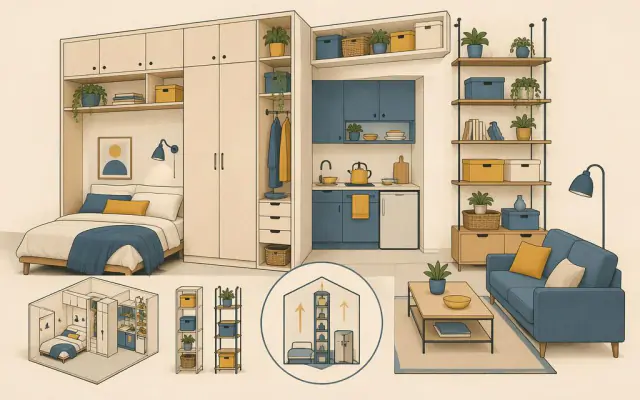
In a studio flat the floor is precious: it is where you sleep, work, cook and relax. The walls, the backs of doors and the space above furniture are where your storage should go. Here is how to use them, including ideas that do not need a drill.
Start with an inventory
Before adding shelves, sort what you own into three groups: things you use every day, things you use every few weeks, and things you keep for seasons or occasions. Daily items belong between knee and shoulder height. Occasional items can go higher. Seasonal items go highest, under the bed or in vacuum bags.
Walls
- Tall, narrow shelving units (bookcases around 40 cm wide reaching close to the ceiling) hold far more than wide, low units in the same floor area. Fix them to the wall with an anti-tip strap; most come with one.
- Floating shelves above a desk, sofa or bed keep books and decor off the surface.
- Pegboards and rail systems in the kitchen or hallway hold utensils, bags, headphones and keys, and are easy to rearrange.
- A shelf above the door frame is often forgotten. It is ideal for books or boxes you rarely need.
Doors
- Over-the-door organisers with pockets or baskets fit on bathroom, wardrobe and cupboard doors without fixings. Check the door still closes with the hook in place.
- Hooks on the inside of cupboard doors hold lids, cleaning cloths or jewellery.
- Door-mounted ironing board holders free space in the cupboard.
Furniture with height
- A loft or high bed creates room underneath for a desk, sofa or wardrobe.
- A bed with drawers or a lift-up base turns the largest object in the room into storage.
- Wardrobes that reach the ceiling, or a top box on an existing wardrobe, use the space that usually collects dust.
Renter-friendly options
If your lease does not allow drilling:
- Tension rods and floor-to-ceiling poles wedge between floor and ceiling and support shelves or hooks.
- Leaning ladder shelves rest against the wall without fixings (still secure them with a small strap if you can).
- Heavy-duty adhesive hooks and strips hold light items; read the weight rating and prepare the surface as instructed.
- Freestanding clothes rails replace a wardrobe and can be hidden with a curtain.
Always check your lease and talk to your landlord before fixing anything heavy; many are happy to approve a few screws for safely anchored furniture.
Keep it light
Lots of shelving can make a small room feel enclosed. Keep the top shelves for neat, matching boxes, leave some gaps, and use light colours that blend with the walls. Mirrors on wardrobe doors make the room feel larger.
Cables and gadgets
Electronics generate clutter: chargers, cables, remotes and power strips. A wall-mounted charging shelf near the socket keeps phones and tablets off the floor. Pair it with one multi-port charger instead of several separate plugs, and the shelf stays tidy.
For workspace ideas, see setting up a desk in a small room.